The Mystery of Early Minecraft: The Story of the Glass Pillar
- Android: 8,0+🕣 Updated
- CategoryInstructions
![The Mystery of Early Minecraft: The Story of the Glass Pillar]()

Every Minecraft veteran knows the game has come a long way from simple test builds to infinite worlds. But not everyone remembers the strange artifacts of its early versions. Today, we’ll revisit one of the most unusual structures in the game’s history — the glass pillar. What was this structure, why was it added, and why was it abandoned forever?
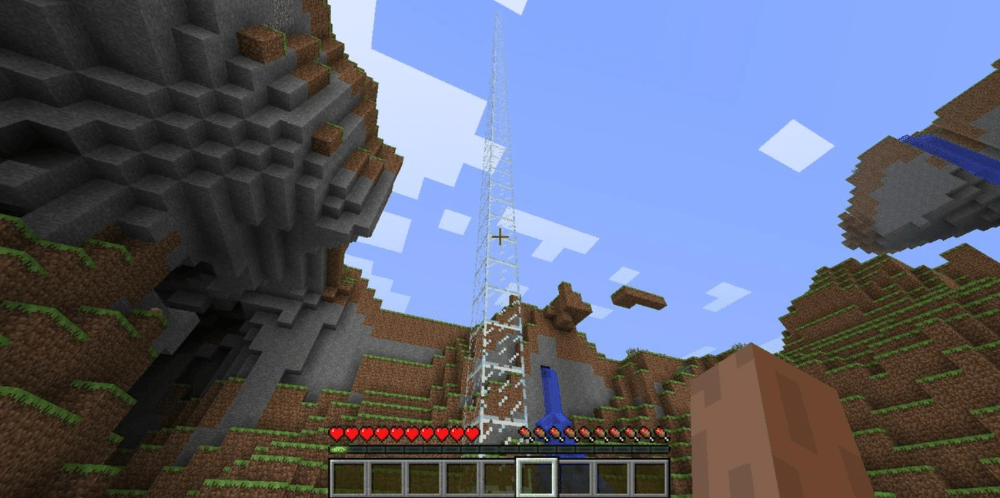
What was the glass pillar?
The glass pillar — a giant vertical column, one block by one block in size, made entirely of regular glass. It stretched from the ground’s surface to the maximum build height, reaching straight into the sky. This structure looked extremely simple and unnatural. A massive transparent line sharply contrasted with the natural landscapes of dirt and stone.
Why was it needed, and when did it appear?
This element was added to the game on February 27, 2010, during the testing phase of the Infdev version. At that time, the game’s creator, Markus Persson (Notch), was implementing a crucial mechanic — infinite world generation.
Before Infdev, maps had strict boundaries. Getting lost was difficult. But with the introduction of infinite worlds, players faced a serious problem. Once they moved away from the spawn point, finding their way back became nearly impossible. The glass pillar served as a lifesaving beacon. It was generated precisely at the zero-point coordinates where the player spawned. Thanks to its colossal height, the pillar was visible from afar, helping players reliably find their way home.
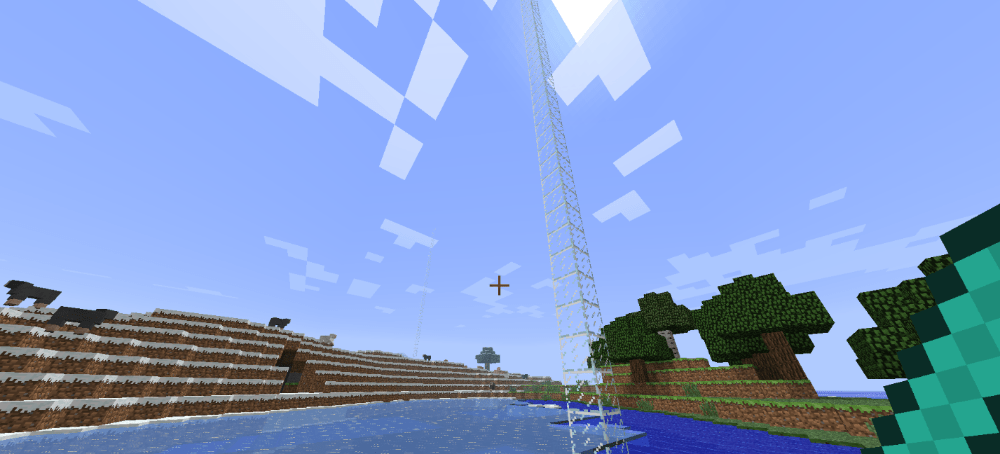
Reasons for changes and the new navigation system
Despite its usefulness, the era of the glass pillar was short-lived. By the end of March 2010, it was permanently removed from generation. There were several reasons for this decision:
- Aesthetics. A massive glass stick in the middle of a beautiful landscape ruined the exploration atmosphere. It looked more like a developer’s tool than part of the world.
- Mechanic evolution. Navigation needed to become a natural part of gameplay, dependent on the player’s actions.
Instead of the awkward pillar, developers began introducing a new, deeper navigation system. Soon, the game featured a compass. This item pointed directly to the player’s original spawn point. This solution was an elegant way out: navigation became part of crafting and survival. Later, the system was enriched with new details — beds to change the spawn point and convenient coordinate displays.
Impact on players
For the few who played during the Infdev era, the glass pillar became a symbol of the first steps into infinite worlds. Players built their first bases right around this column to never lose them. The removal of the pillar forced gamers to adapt. They had to learn to navigate by the sun, memorize landscapes, and later — value and protect their hard-crafted compass.
Conclusion
The glass pillar — a quirky relic of the past that helped Minecraft navigate a challenging transitional period. It brilliantly fulfilled its purpose, prevented the first explorers of infinite lands from getting lost, and made way for more engaging game mechanics.
Did you experience the times when you had to build massive dirt towers near your home to avoid getting lost after a mining trip? Share your stories about finding your way back to your base in early Minecraft versions in the comments below!
- publishedMceadmin
(Google Ads) Privacy Policy and Terms of Use


![Chicken Gun [Null's]](/uploads/mini/scroll-rel/63/1693986698_icon.png)


