How and Why Minecraft Version Numbering is Changing
- Android: 8,0+🕣 Updated
- CategoryInstructions
![How and Why Minecraft Version Numbering is Changing]()

For long-time Minecraft fans, sequences like 1.20 or 1.21 have become almost second nature. We’re used to waiting for major updates once a year, guessing what the next number will be. However, Mojang Studios has decided to rethink this approach to make development more flexible and understandable. Let’s explore what’s changing, why it’s happening, and how it will impact our gaming experience.
Why the Old System is Being Left Behind
For a long time, Minecraft followed a classic scheme: one base version (e.g., 1.21) followed by minor patches (1.21.1, 1.21.2, etc.). This system worked well when major updates were released strictly once a year, usually in the summer.
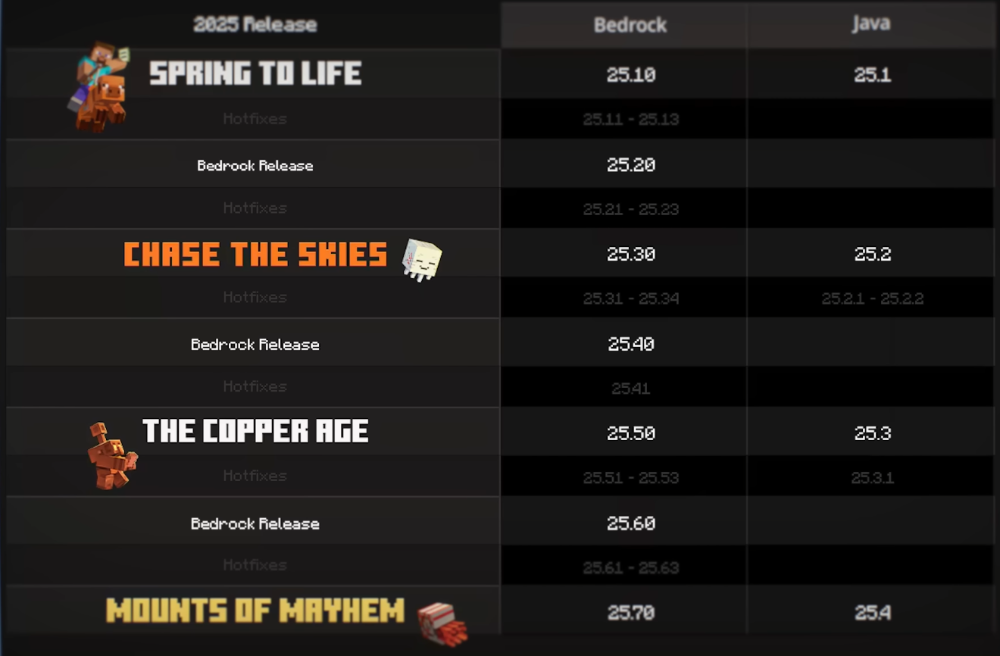
However, in recent years, Mojang has shifted to more frequent content releases. Developers want to add new features, mobs, and blocks in smaller, regular portions rather than one giant wave. The old numbering system stopped reflecting reality: players found it hard to pinpoint which patch introduced a specific feature, especially if it came out in, say, version 1.20.5. The new structure aims to eliminate this confusion and give developers more freedom.
What Do the Numbers Mean?
Now, Minecraft version numbering will more accurately reflect the nature of changes. While developers maintain overall continuity, the focus shifts to a clearer separation of update types.
The key changes concern how we perceive "minor" releases. In the future, instead of waiting a long time to move from 1.21 to 1.22, we’ll see significant changes more frequently within the current cycle. This means that a version previously considered just a technical patch (e.g., 1.21.2) can now include fully-fledged new content, known as "Game Drops."
This allows the team to avoid tying all new features to a specific calendar date. If a new mechanic or biome is ready, it can be added to the game immediately, without artificially waiting for the "big summer patch."
How Will This Affect Players and Servers?
For the average player, this is great news. You won’t have to wait a year to see something new in the cubic world. The game will stay fresh and engaging throughout the year. However, there’s also a technical side to consider.
- Mod Compatibility: Mod creators will need to adapt to a more frequent release cycle. Initially, updating favorite mods might take a bit longer as the code structure will change more often.
- Servers: Server administrators will need to keep a closer eye on versions. If previously you could stay on a stable 1.20 for a long time, now important content might appear in an intermediate update, requiring a server update to access new features.
Looking Ahead
The transition to the new numbering system is not just a change in numbers. It’s a signal that Minecraft continues to evolve, adapting to modern game development realities. Mojang aims to make the update process smoother and more predictable, eliminating long periods of silence between major announcements.
What do you think about these changes? Do you like the idea of receiving content more frequently in smaller portions, or do you miss the era of one big annual update? Share your thoughts in the comments.
- publishedMceadmin
(Google Ads) Privacy Policy and Terms of Use


