Minecraft — more than a game: How the cubic world generates over $100 million a year
- Android: 8,0+🕣 Updated
- CategoryInstructions
![Minecraft — more than a game: How the cubic world generates over $100 million a year]()

It seems incredible, but a game that started as a modest indie project by one person has turned into a financial giant, consistently bringing its owners hundreds of millions of dollars annually. Minecraft has long ceased to be just a "sandbox" about survival and building — it is a global platform, a cultural phenomenon, and undoubtedly one of the most successful commercial products in video game history. Let’s explore how this financial empire is built and why, more than a decade after its release, it continues to break records.
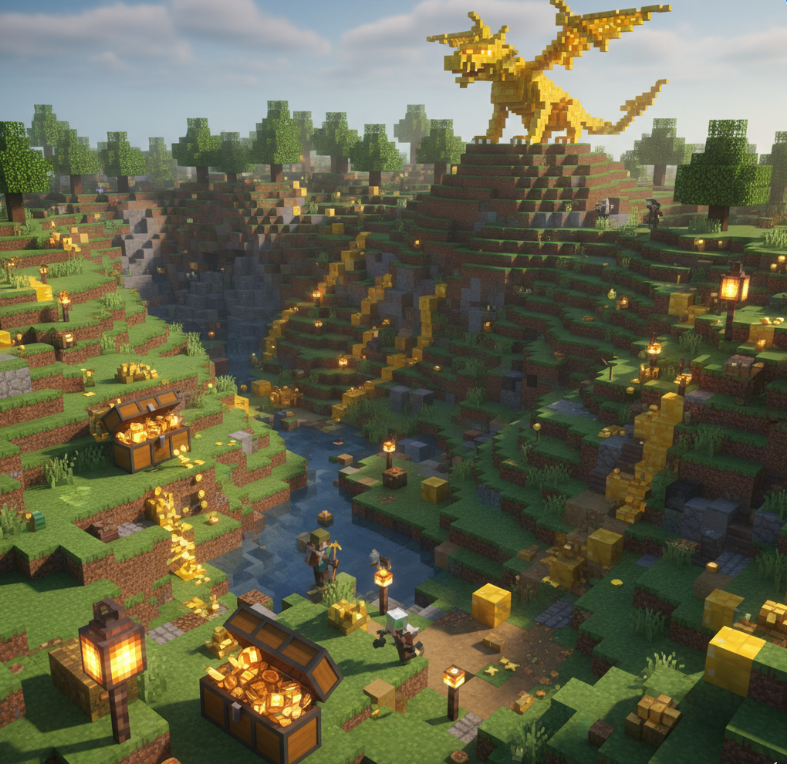
Why Minecraft stays on top
The secret to Minecraft’s financial success lies not only in its brilliant mechanics. It’s the result of a smart development strategy that keeps players engaged for years.
First, there’s the endless replayability. Unlike story-driven games that take 20-30 hours to complete, Minecraft offers limitless opportunities for creativity. Players always return to build something new or explore the latest update.
Second, continuous support. Mojang Studios (under Microsoft) regularly releases major free updates, adding new biomes, mobs, and mechanics. This keeps the old audience interested and constantly attracts new players.
Third, cross-platform play. The ability to play with friends, whether they’re on PC, PlayStation, Xbox, or a smartphone, has erased boundaries and made the game accessible to virtually everyone.
The anatomy of revenue: where do the millions come from?
The $100 million figure — is just the tip of the iceberg, made up of several powerful revenue streams.
Game sales
Despite its age, Minecraft continues to sell millions of copies annually. It’s one of the few games people buy multiple times: first on PC, then on console, and later on a smartphone to play on the go. Its status as the "best-selling game in history" (over 200 million copies) speaks for itself.
Minecraft Marketplace
This is arguably the main driver of modern monetization for the Bedrock version. Players can purchase skins, texture packs, pre-built worlds, and mini-games created by third-party developers. Microsoft takes a commission from every transaction, creating an ecosystem where both content creators and the company profit.
Minecraft Realms subscription
The desire to play with friends on a private, secure server without technical hassles has made the Realms service popular. The monthly subscription ensures stable, predictable income, independent of seasonal sales.
Merchandising and licensing
Walk into any toy or clothing store, and you’ll see the face of a Creeper or a diamond sword. Selling t-shirts, LEGO sets, plush toys, and books generates colossal profits, expanding the brand’s influence far beyond computer screens.
Impact on players: pay or play?
Surprisingly, despite such revenue, Minecraft manages to avoid aggressive monetization that often irritates gamers. The game’s core content remains accessible after a one-time purchase. All microtransactions are cosmetic or additional — they don’t provide gameplay advantages (pay-to-win), preserving a healthy community atmosphere.
For players, this means stability. The money the game earns is reinvested into its development, server support, and the creation of new projects within the Minecraft universe (as seen with Minecraft Dungeons or upcoming projects).
Conclusion
Minecraft proves that financial success doesn’t require following trends like loot boxes or battle passes. It’s enough to create a unique product, respect your community, and provide quality service. Over $100 million in annual revenue — is the natural result of a game that has become an integral part of the digital lives of millions of people.
What do you think about Minecraft’s monetization? Have you purchased anything on the Marketplace, or do you prefer the classic Java version with free mods? Share your thoughts in the comments.
- publishedMceadmin
(Google Ads) Privacy Policy and Terms of Use


