The Evolution of Redstone: How Torches Stopped Being Buttons in Minecraft
- Android: 8,0+🕣 Updated
- CategoryInstructions
![The Evolution of Redstone: How Torches Stopped Being Buttons in Minecraft]()

Early versions of Minecraft contained many unusual mechanics that seem strange today. During the alpha and beta testing era, players were just beginning to explore redstone, and developers were experimenting with block logic. One of the most interesting features of that time was the ability to use regular redstone torches as buttons to activate mechanisms. Over time, Mojang Studios revisited this concept.
How Torches Worked in Early Builds
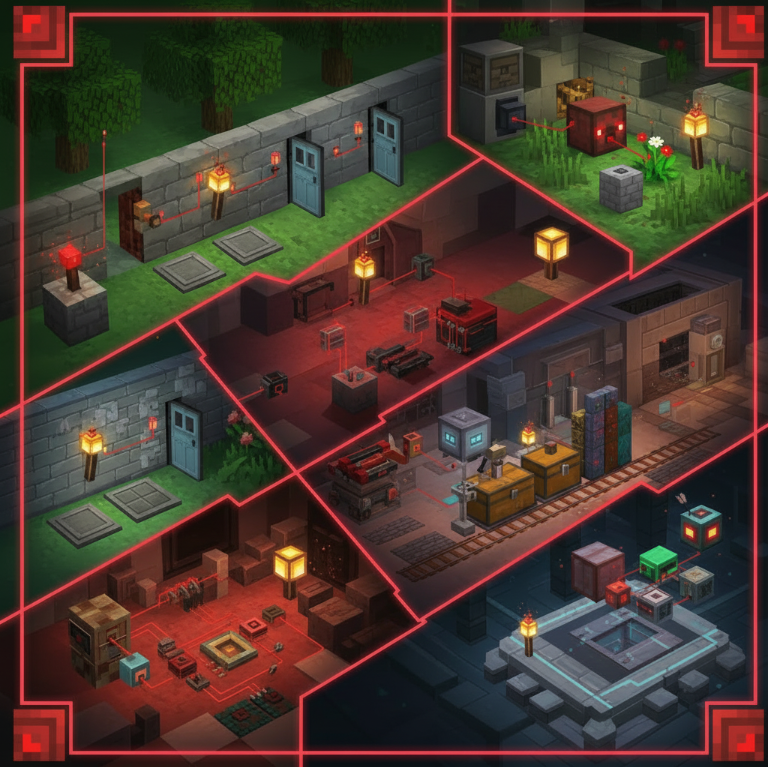
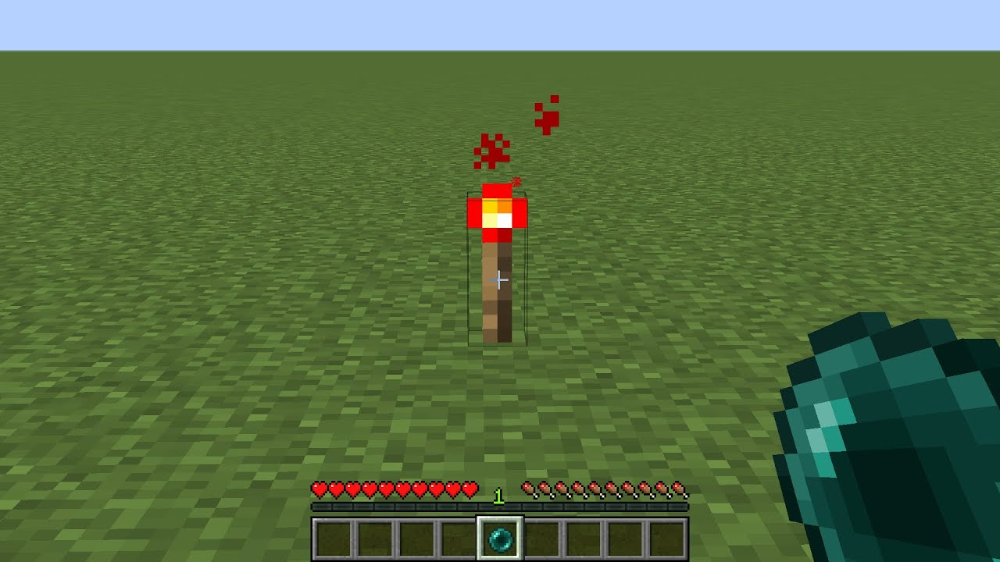
In older versions of the game, before the major redstone mechanics update, players often used redstone torches not only as a constant power source but also as a tool for manually controlling circuits. Placing and quickly breaking a torch created a short signal that activated doors, pistons, and other elements.
Gamers actively used this feature for several reasons. First, it saved resources in the early stages of survival, when obtaining stone and crafting a button was harder than simply placing a ready-made torch. Second, it served as an excellent testing tool: mechanism builders could quickly check the functionality of individual circuit nodes on the fly without needing to lay long transmission lines to levers.
Reasons for Changing the Mechanics
As Minecraft evolved, the structure of updates became more systematic. Developers aimed to make the game intuitive and logical. Using a torch as a temporary switch broke the basic rules of the game. The redstone torch was designed exclusively as a constant signal source and an element for inversion (creating a logical «NOT» gate).
Removing this function was a necessary step to stabilize the game engine. The mechanics of placing and removing torches often led to bugs, short circuits, and unpredictable circuit behavior. Eliminating this unconventional use helped clean up the code and lay the groundwork for more complex and stable engineering solutions.
Transition to the New Control System
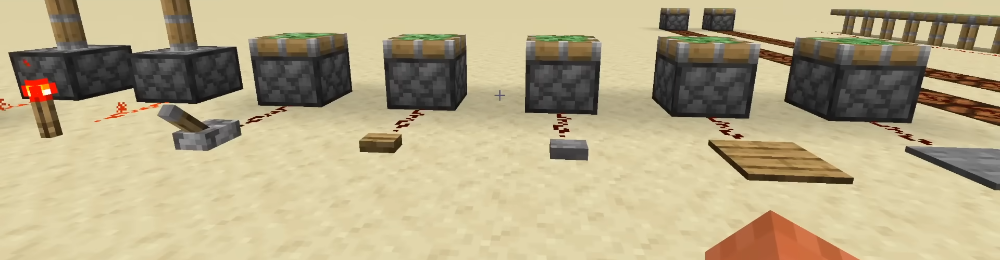
Instead of improvised switches, developers expanded the arsenal of specialized blocks. The game introduced wooden and stone buttons, levers, various types of pressure plates, and later — daylight sensors and observers.
The new system radically changed the approach to construction. Players received clear tools with defined parameters: stone buttons emitted short signals, wooden ones — longer signals, and levers provided constant current. This made redstone mechanics predictable. Beginners could learn the basics of engineering faster, while experienced builders began creating incredible projects — from automatic farms to fully functional computational machines within the game.
Conclusion
Removing the torch-button function was an important milestone in Minecraft's history. This step transformed chaotic experiments with redstone dust into a strict and comprehensible in-game science that continues to evolve to this day.
Do you remember the times when mechanisms were tested with a simple redstone torch? Share your memories of old game versions and your favorite retro mechanics in the comments.
- publishedMceadmin
(Google Ads) Privacy Policy and Terms of Use


![Chicken Gun [Null's]](/uploads/mini/scroll-rel/63/1693986698_icon.png)


