Global Engine Update: Mojang Migrates Minecraft Java Edition from OpenGL to Vulkan
- Android: 8,0+🕣 Updated
- CategoryInstructions
![Global Engine Update: Mojang Migrates Minecraft Java Edition from OpenGL to Vulkan]()

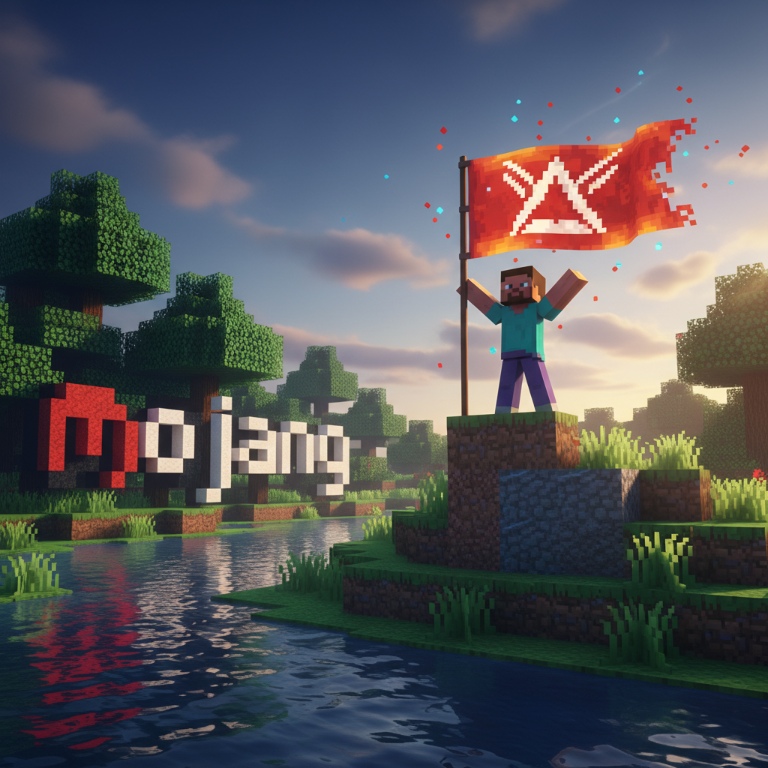
The world of Minecraft is on the brink of perhaps the most significant technical change of the last decade. Mojang has officially announced the start of work to replace the outdated OpenGL graphics interface with the modern and powerful Vulkan API in the Java Edition.
For game veterans accustomed to the technical nuances of the "blocky sandbox," this news feels like a true revolution. Let’s explore why the developers decided to take this step now and how it will impact your gaming experience.
Why OpenGL Is Becoming a Thing of the Past
The OpenGL graphics library has faithfully served Minecraft since the earliest alpha versions. However, technology doesn’t stand still. What was the industry standard 15 years ago has now become a "bottleneck" limiting the game’s development.
The main issue with OpenGL is its high level of abstraction and strong dependence on graphics card drivers. In today’s reality, where game worlds are massive and render distance is critically important, the old engine struggles to efficiently allocate resources. It often overloads a single CPU core, leaving powerful multi-core systems "idle" while the game delivers low FPS.
The Power of Vulkan: What Changes "Under the Hood"
The transition to the Vulkan API is not just a cosmetic overhaul but a fundamental replacement. Vulkan is a low-level interface that gives developers direct control over the graphics card and processor.
Here are the key advantages of the new architecture:
- Multithreading: Vulkan can efficiently distribute tasks across all CPU cores. For Java Edition, which has historically suffered from poor CPU optimization, this could mean a massive performance boost.
- Reduced Driver Load: The game will be less dependent on the quirks of graphics card manufacturers’ software.
- Modern Graphics Effects: The new API opens the door to native support for more complex shaders and lighting effects without the need for external "workarounds."
Transition Phases: Evolution, Not Shock Therapy
Mojang understands that an abrupt engine change could alienate part of the audience with older hardware. Therefore, the implementation of Vulkan will be gradual.
According to the developers’ plans, a hybrid period awaits us:
- Testing Phase: Upcoming snapshots will include a toggle in the graphics settings. Players will be able to choose between "Stable OpenGL" and "Experimental Vulkan."
- Optimization: Collecting data on performance across thousands of PC configurations to fix bugs.
- Full Transition: Eventually, when the new engine proves its stability, OpenGL support will be discontinued, and Vulkan will become the sole standard for Java Edition.
Impact on Players and the Modding Community
For the average gamer, this news is purely positive. It is expected that "stutters" during chunk loading will become a thing of the past, and FPS will be more stable even on mid-range PCs.
However, for mod creators, interesting times lie ahead. Modders developing graphical modifications (such as OptiFine or Sodium) will need to adapt their creations to the new architecture. This may take time, and in the first months after the full transition, some popular mods may be temporarily unavailable. However, in the long run, Vulkan’s tools will allow modders to create visual effects on an entirely new level.
Conclusion
The transition of Minecraft Java Edition to Vulkan is a necessary step to keep the game relevant and technically advanced in 2026 and beyond. Mojang is essentially rewriting the game’s visual core to give us even more freedom and beauty in the worlds we love.
What do you think about this transition? Is your hardware ready for the new technologies, or are you worried about compatibility with older mods? Share your thoughts in the comments!
- publishedMceadmin
(Google Ads) Privacy Policy and Terms of Use