Minecraft on Game Boy Color: how one enthusiast ran a 3D sandbox on an 8-bit console
- Android: 8,0+🕣 Updated
- CategoryInstructions
![Minecraft on Game Boy Color: how one enthusiast ran a 3D sandbox on an 8-bit console]()

At first glance, Game Boy Color and a three-dimensional block world seem incompatible. But one self-taught developer proved otherwise. A homebrew project called Minicraft 3D made a 1998 8-bit console do something it was never meant to do — render a full 3D space in the style of Minecraft. Here’s how that was even possible, and why the gaming community can’t stop talking about it.
What Game Boy Color is, and why this achievement is so impressive
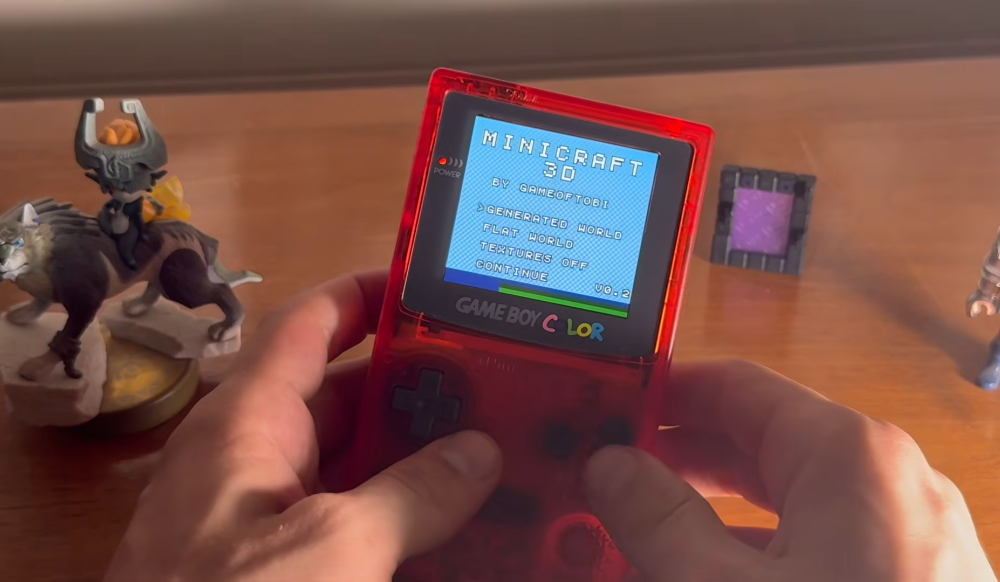
Game Boy Color launched in 1998 and, by the standards of its time, was a solid handheld console — but definitely not a platform for 3D graphics. Under the hood, it has an 8-bit Zilog Z80 processor, just 32 KB of RAM, 16 KB of video memory, and a screen with a resolution of 160?144 pixels. No 3D chip, no polygon support — just sprites and tiles. That’s why running something even remotely resembling Minecraft on this hardware is not just a curious experiment, but a real technical feat.
Who is behind the project, and what Minicraft 3D actually is
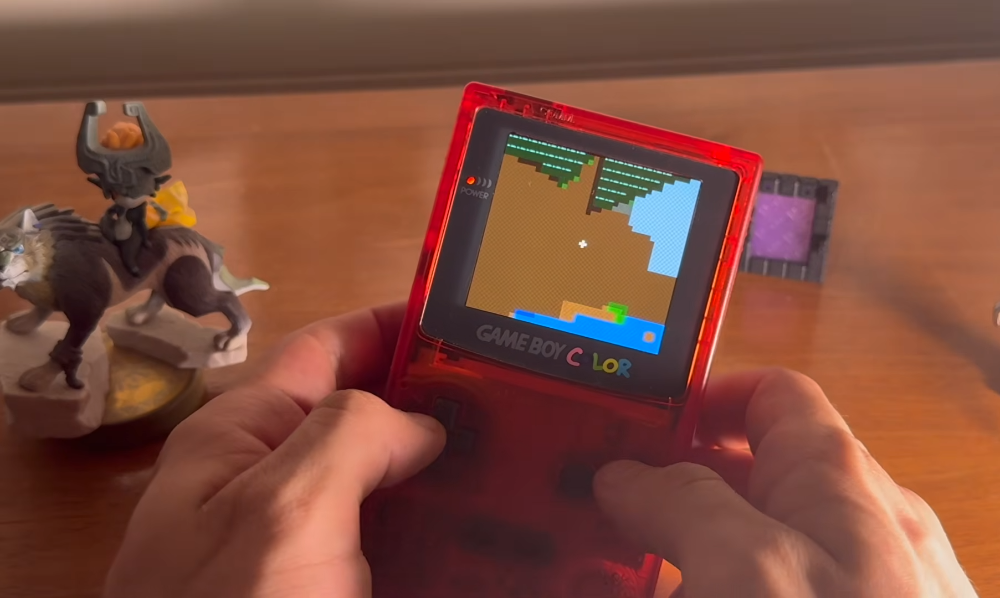
The project was created by Brendan Tobias Fridly, known online as Game of Tobi. He’s a homebrew developer and YouTube creator who is no stranger to impossible ideas: he previously ported Super Mario 64 to Game Boy Advance and worked on a version of Minecraft for the same platform. Minicraft 3D is his most ambitious project so far. In Fridly’s own words: «Honestly, I wasn’t sure this was even possible on Game Boy.» The project is available for download as a .GBC file on his Patreon page.
How the game works: modes and features
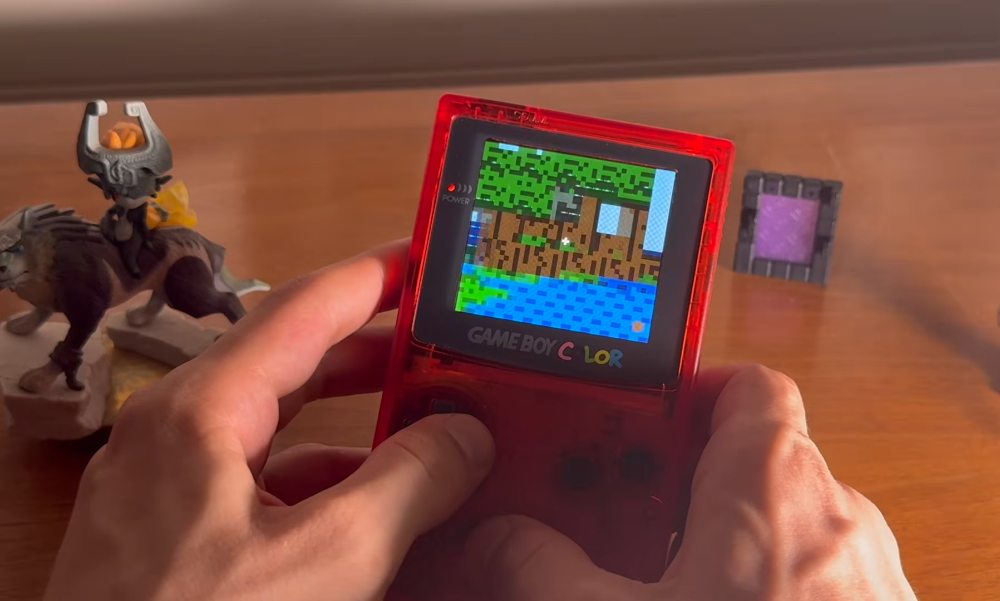
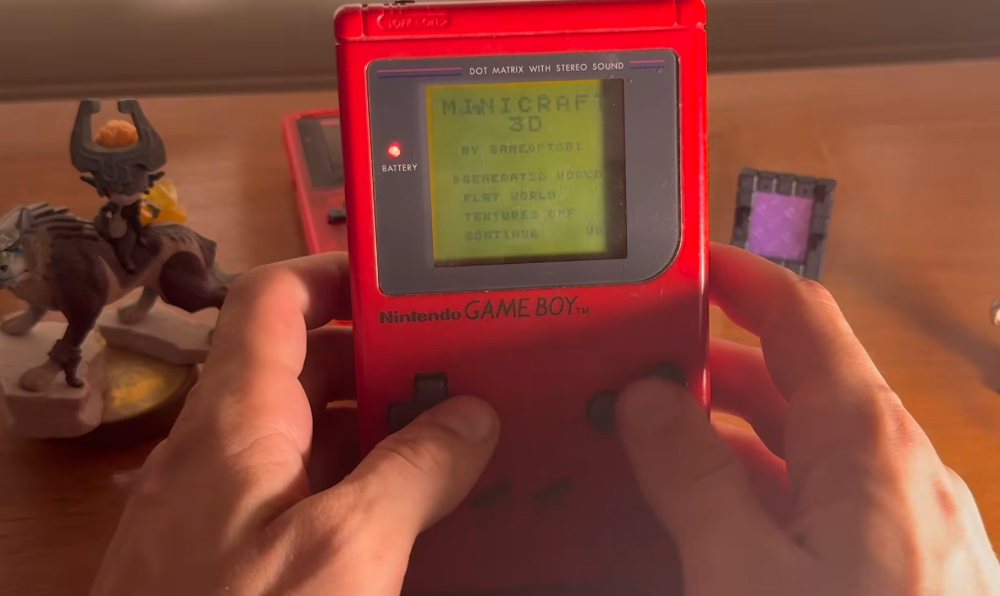
Despite the modest hardware, Minicraft 3D offers a very recognizable gameplay experience. Players can move freely around the world, break blocks, place new ones, and build structures. The menu includes two modes: a randomly generated 3D world and a flat landscape better suited for building. There’s even an option to enable textures — though it significantly hurts performance, so the best way to play remains texture-free. Notably, the project works not only on Game Boy Color, but also on the original Game Boy — where the image appears in black and green tones.
Technical details and limitations
The main challenge was simple: Game Boy simply cannot handle 3D. The developer had to build the illusion of depth from scratch, with no built-in tools at all. Every frame requires precise calculations: geometry that is too complex or a scene that is too crowded instantly tanks performance. On Game Boy Color, color helps distinguish blocks and read the space. On the monochrome Game Boy, the task is even harder — depth has to be conveyed through contrast and movement alone. Fridly himself calls the current version «the best I could do — for now» and promises to keep working on optimization and expanded features. A full commercial release is not planned.
How the gaming community reacted
News of Minicraft 3D spread instantly across gaming sites and forums. Outlets such as Time Extension, GenerationAmiga, and IXBT.games have already covered the project, while users in the comments are expressing genuine admiration. And that’s no surprise: the phrase «Minecraft on Game Boy» is curious enough on its own. The project is interesting on two levels — for regular players, it’s a fun and unexpected experiment; for developers and technically minded enthusiasts, it’s a clear example of how to squeeze the most out of the least.
When limitations become the engine of progress
Minicraft 3D is not a Minecraft port, nor is it an attempt to trick the hardware. It is a thoughtful demake that preserves the core idea — a blocky 3D world, freedom of movement, and the ability to build and destroy — while honestly working within the platform’s strict limitations. The project is a reminder that some of the most interesting solutions are born exactly where resources are critically scarce.
What do you think — can Minicraft 3D be called real Minecraft? Or is it just an impressive technical trick? Share your thoughts in the comments!
- publishedMceadmin
(Google Ads) Privacy Policy and Terms of Use


