When Code Breaks Reality: The Strangest Minecraft Bugs and How They Changed the Game
- Android: 8,0+🕣 Updated
- CategoryInstructions
![When Code Breaks Reality: The Strangest Minecraft Bugs and How They Changed the Game]()

Minecraft — is not just a game about building with blocks. Over more than a decade, this project has become a true cultural phenomenon. However, the journey from Markus Persson's indie development to Microsoft's global franchise was not all smooth sailing. This path was filled with code errors, glitches, and system failures.
Surprisingly, bugs played a key role in shaping the community. Some were annoying, others — amusing, and some forever changed the game mechanics. In this article, we will explore the most legendary bugs, uncover the technical reasons behind them, and see what they led to.
Why Does Minecraft "Break" So Often?
Before diving into specific examples, it’s important to understand the nature of these errors. Minecraft, especially its original Java version, — is an incredibly complex mechanism built on procedural generation.
In the early versions (Alpha and Beta), the code was written quickly and often without considering the scale the game would later achieve. With new updates, Mojang developers had to rewrite entire sections of the engine — from the lighting system to terrain generation. This inevitably led to conflicts between old and new data. It was precisely in these version overlaps that the most interesting anomalies were born.
Far Lands: The Edge of Infinity
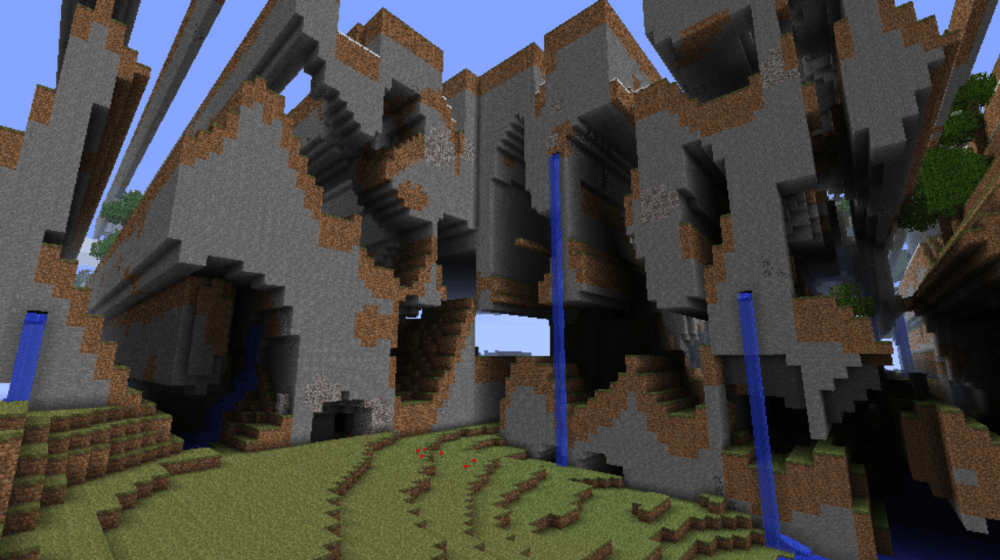
Arguably, the most famous and mystical bug in video game history was the Far Lands. Until Beta 1.8, the Minecraft world was theoretically infinite, but in practice, this wasn’t entirely true.
The Bug:
If a player moved more than 12,550,820 blocks away from the map's center, the terrain generator would go haywire. Due to floating-point precision errors, familiar hills and rivers turned into a surreal wall of distorted blocks riddled with holes and lags.
Impact on the Community:
This bug inspired true digital pilgrims. The most famous of them was Kurt J. Mac, who in 2011 began his journey to the Far Lands as part of the charity project Far Lands or Bust. Although this bug has been fixed in modern versions (now there’s just an invisible boundary), the "Far Lands" remain a symbol of the game world's mystery.
Quasi-Connectivity: The Bug That Became a Feature
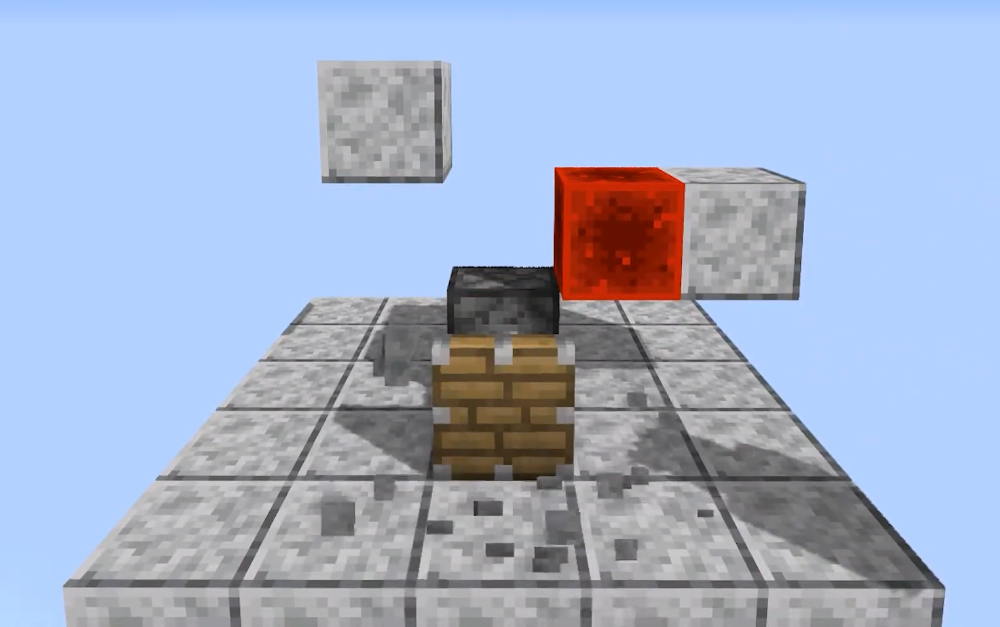
Not all bugs are visual. Some hide deep in the mechanics and change the gameplay itself. A prime example — Quasi-connectivity in pistons and redstone.
The Bug:
In the Java Edition, pistons would sometimes activate from a power source located diagonally or one block above, defying the game’s logic. Technically, this was a coding error copied from door behavior.
Impact on the Community:
Instead of complaining, the technical community (redstoners) began using this bug to create incredibly compact mechanisms, farms, and automatic doors. When Mojang considered fixing it, the community revolted. In the end, the developers conceded: in the Java version, this bug was officially recognized as a "feature," though it doesn’t exist in the Bedrock Edition, which still sparks debates among players of different platforms.
Boat Chaos and Elevators
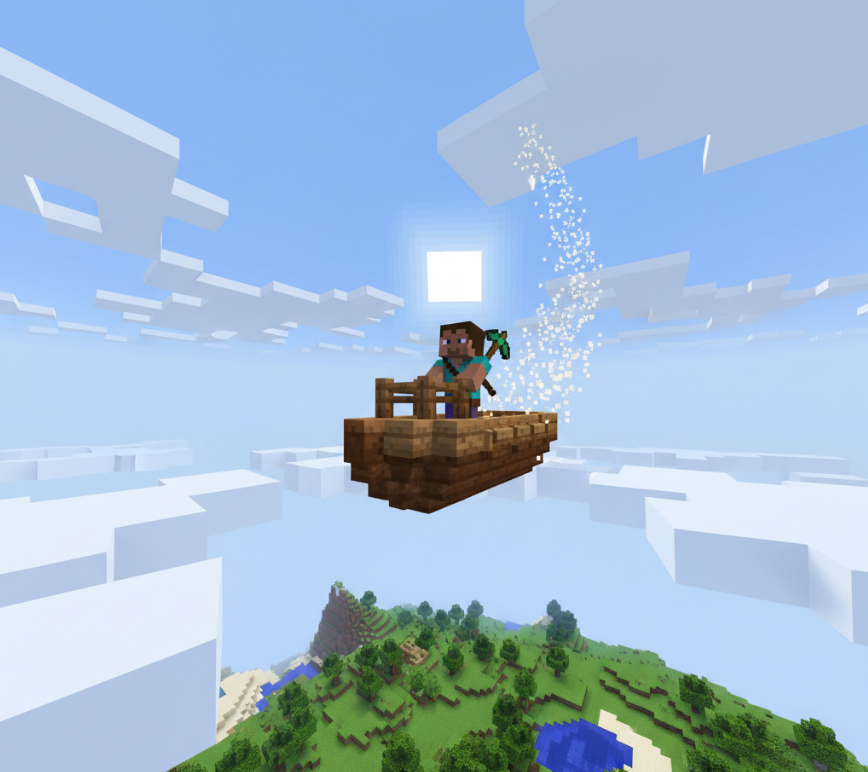
Physics in Minecraft has always been peculiar, but the behavior of boats in older versions deserves its own chapter in programming textbooks.
The Bug:
Previously, boats were made of "glass" — they would break upon colliding with a lily pad. But there was another bug: under certain conditions (like placing them on a minecart or using pistons), boats could ignore gravity or reach superluminal speeds.
Impact on the Community:
Players invented the "E-Ray" (boat elevators), which allowed them to instantly ascend hundreds of blocks, passing through textures. This led to an arms race: developers fixed the physics, and players found new ways to break it. Ultimately, this pushed Mojang to completely overhaul water transportation in update 1.13, making boats a reliable means of travel rather than a gamble.
Duplication: The Eternal Struggle for Economy
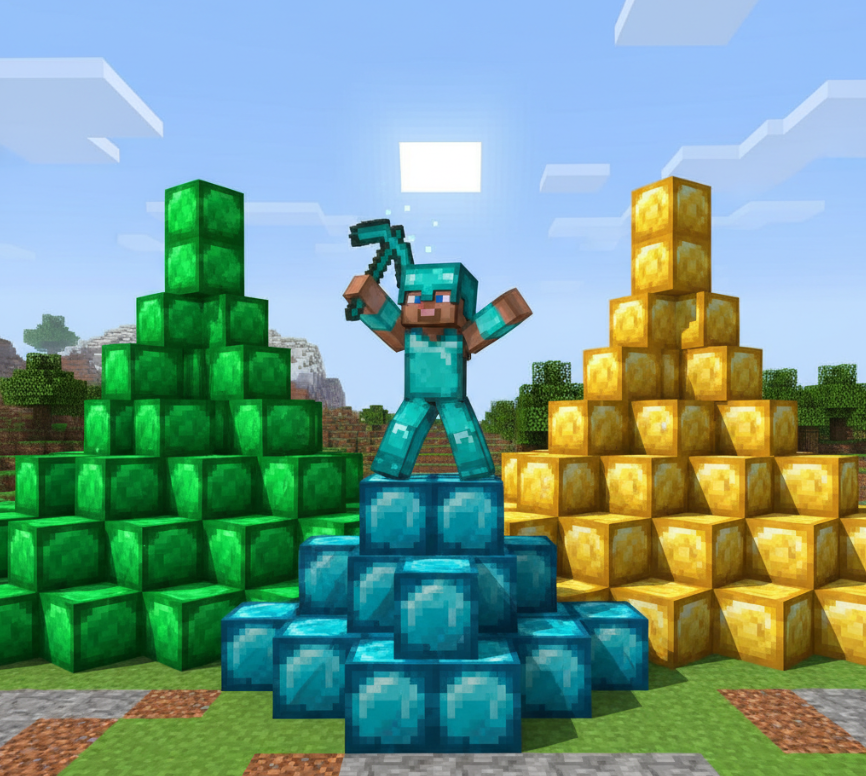
While the previous bugs were amusing, item duplication errors (dupes) — are a headache for server administrators.
The Bug:
There are hundreds of ways to duplicate items: from using donkeys with chests in older versions to complex manipulations with recipe books and server lags. The cause often lies in client-server desynchronization: the game believes the item is in two places at once.
Impact on the Community:
On anarchic servers like 2b2t, dupes became part of the culture and economy. On regular servers, this led to the creation of complex anti-cheat systems. For Mojang, fighting dupes has become an endless process, forcing them to constantly improve network code stability.
Conclusion
The history of Minecraft bugs teaches us an interesting lesson: in the digital world, errors are not always evil. The "Far Lands" gave us the spirit of exploration, quasi-connectivity fostered engineering creativity, and strange physics encouraged experimentation.
Mojang developers have adopted a unique strategy — they listen to their audience. Instead of silently fixing everything, they analyze how a "bug" affects the enjoyment of the game. It’s this dialogue that makes Minecraft a living organism, growing and changing with us.
What’s the strangest bug you’ve encountered? Did you manage to use it to your advantage, or did it ruin your build? Share your stories in the comments — maybe your experience will become part of the next legend!
- publishedMceadmin
(Google Ads) Privacy Policy and Terms of Use


