Crash Chronicles: Part 2. Minecraft Bugs That Became Legends
- Android: 8,0+🕣 Updated
- CategoryInstructions
![Crash Chronicles: Part 2. Minecraft Bugs That Became Legends]()

In the first part, we discussed the mystical Far Lands and the enigmatic quasi-connectivity. But the world of Minecraft is so vast and complex that the list of oddities doesn’t end there. Sometimes the game’s physics takes a day off, portals lead to nowhere, and harmless animals turn into weapons of mass destruction for your computer.
Let’s continue our journey through the history of the most unusual bugs and mechanics that made players see the cubic sandbox in a whole new light.
Falling Sand: Gravity on Demand
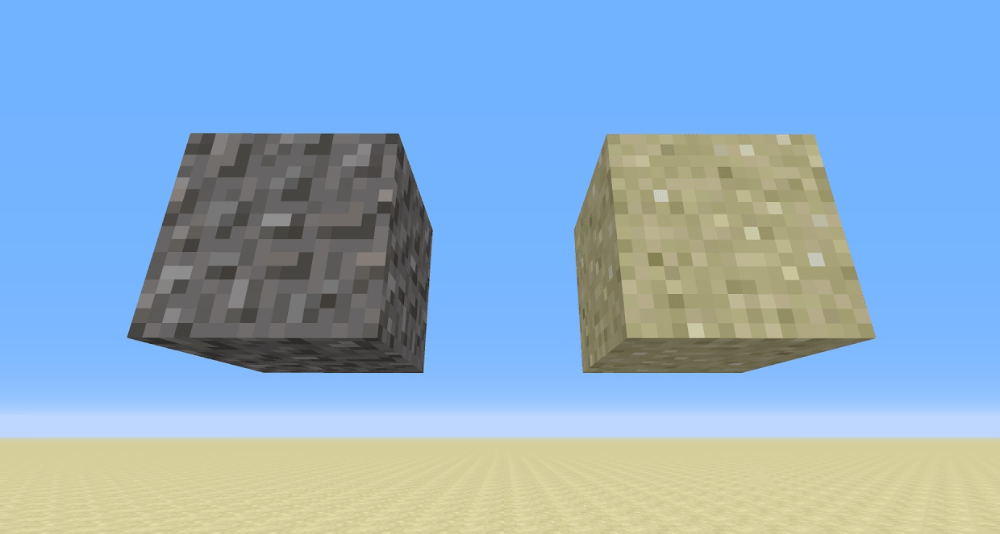
One of Minecraft’s fundamental laws states: blocks float in the air, except for sand and gravel. But players quickly found a way to bypass even this rule.
The Essence of the Bug:
In the game, sand and gravel are special entities that, when falling, transform from blocks into "Entities." Sometimes, due to lag or specific use of torches and pistons, the game would "forget" to return the sand to its solid block state or, conversely, leave it suspended in the air, ignoring updates to adjacent blocks. There was also the legendary "Ghost Block" effect, where the client saw the block, but the server — did not.
What It Led To:
This bug ushered in the era of "sand generators." Players learned to duplicate loose blocks using End portals. Additionally, the ability to suspend sand in the air became the foundation for creating clever traps (Spleef arenas) and parkour maps where the floor could collapse at any moment.
Portal Roulette: Nether Traps
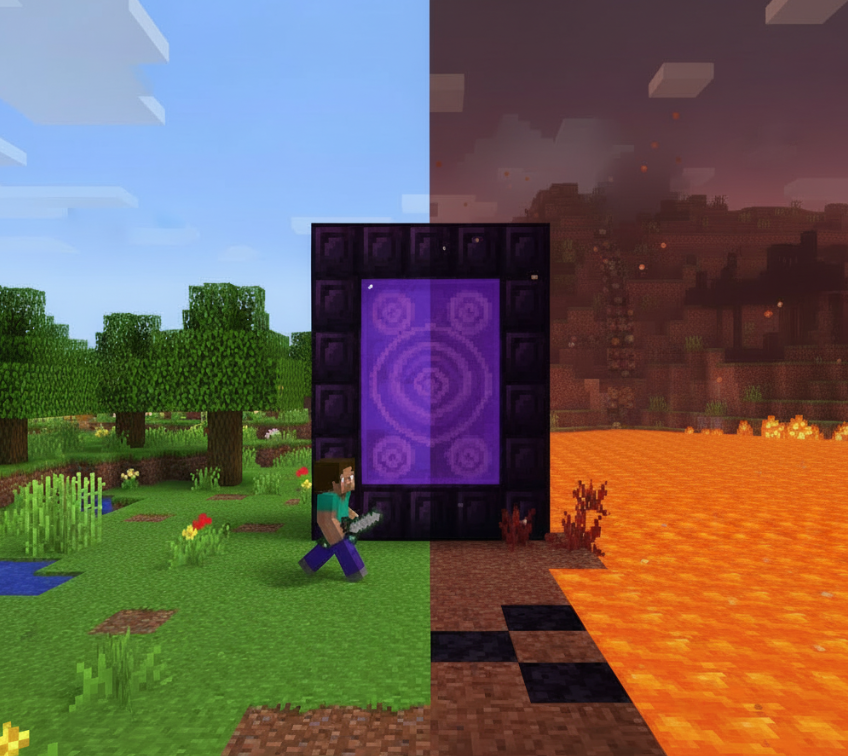
Traveling to the Nether has always been risky, but in the early versions of the game, the biggest danger wasn’t ghasts but the portal generation math itself.
The Essence of the Bug:
When moving to the Nether, the player’s coordinates are divided by 8. In early versions, the algorithm for finding a safe exit location was flawed. Often, the game couldn’t find "solid ground" and would create a portal directly above a lava lake or, worse, inside a solid netherrack wall, causing instant suffocation. There were also cases of "crossed connections," where multiple portals from the overworld led to the same portal in the Nether, creating a logistical nightmare.
What It Led To:
Players became true navigation engineers. The community developed precise coordinate calculators for perfect portal synchronization ("Portal Linking"). The fear of getting stuck in a wall taught everyone to carry a pickaxe and flint and steel, while generation bugs inspired the creation of high-speed highways on the Nether roof (bedrock ceiling), which itself is another bug/feature usage.
Exploding Beds: "It’s Not a Bug, It’s a Feature"
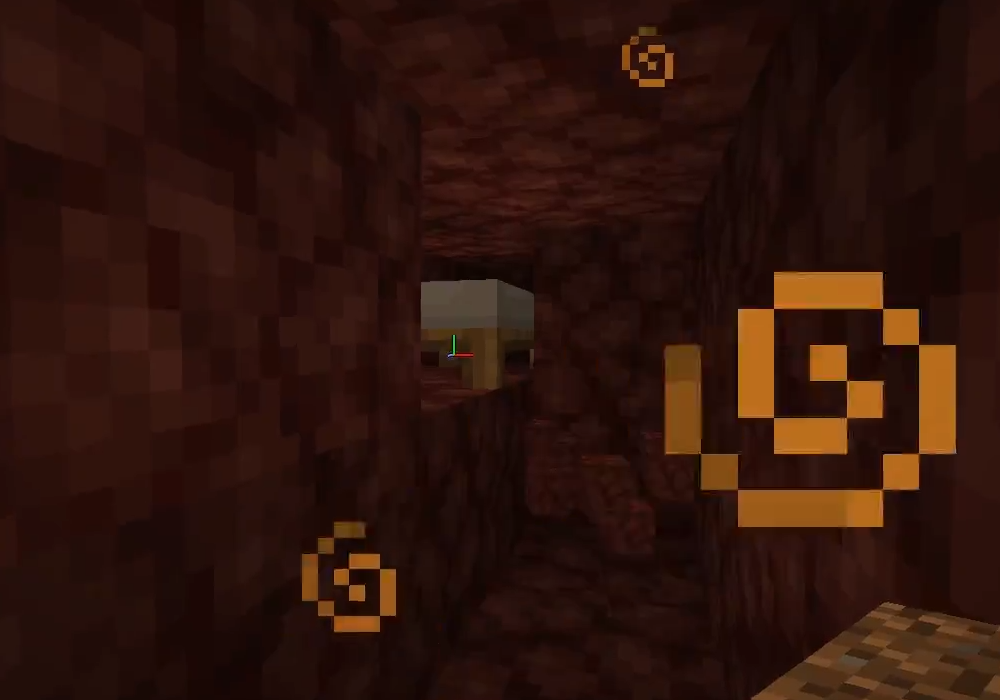
New players often perceive this as a cruel coding error, but veterans know: it’s one of the strangest mechanics, possibly born from a technical limitation.
The Essence of the Phenomenon:
In the game’s code, sleep is tied to the change of time of day
- publishedMceadmin
(Google Ads) Privacy Policy and Terms of Use


