ESA called private Minecraft and Call of Duty servers «piracy»: what’s going on?
- Android: 8,0+🕣 Updated
- CategoryInstructions
![ESA called private Minecraft and Call of Duty servers «piracy»: what’s going on?]()

Imagine this: you’ve spent years playing on your favorite Minecraft server, building, chatting with friends — and then suddenly learn that, according to the industry’s biggest association, you’re doing something illegal. That’s exactly the message millions of gamers got after a hearing in the California Senate.
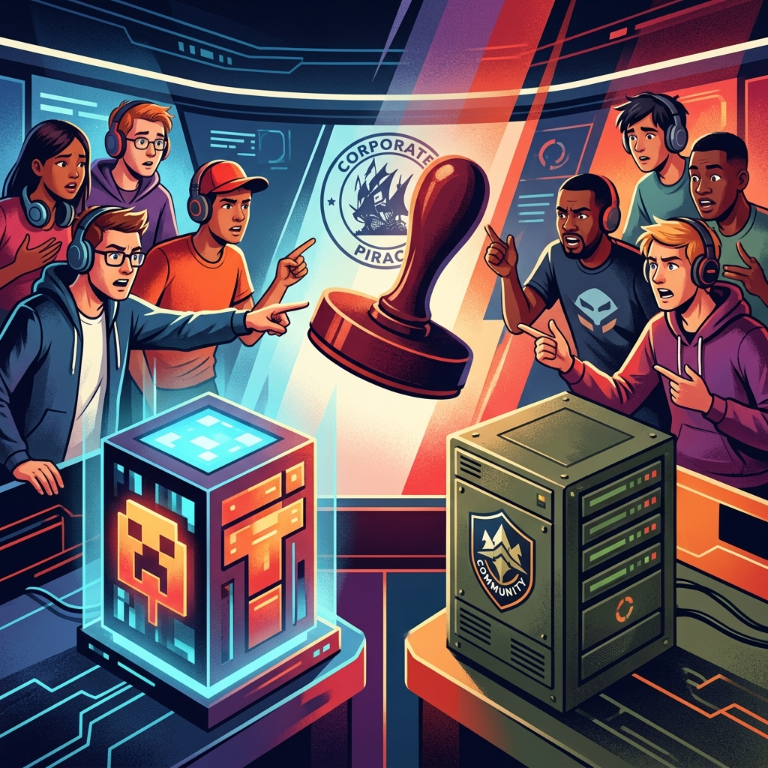
What happened: ESA’s statement on private servers
On June 29, 2026, the California Senate held a hearing on bill AB 1921, known as the Protect Our Games Act. During the discussion, Assemblymember Chris Ward gave an example: the Minecraft and Call of Duty communities have long kept these games alive through private servers.
However, Jennifer Gibbons, Vice President of State Government Affairs at the Entertainment Software Association (ESA), interrupted him: «They are illegal. They have nothing to do with Microsoft». When one committee member asked whether this was something like a «black market», Gibbons answered directly: «Yes. We consider it piracy. We currently have two ongoing lawsuits against private servers».
Context: why AB 1921 matters
AB 1921, introduced by Chris Ward, is meant to protect players from the sudden shutdown of online games. Under the bill, publishers would be required to:
- warn players at least two months before servers are shut down;
- provide an offline mode or hand over server software to the community;
- refund users who did not get to use paid content.
The idea sounds reasonable: players spend real money on products that can disappear at any moment by company decision. The bill is supposed to give them at least some protection. ESA, however, opposed it, calling the initiative a threat to the industry.
Why this caused controversy: a clash with real practice
Gibbons’ statement immediately triggered a wave of criticism — and for good reason. The thing is, Mojang itself (the Minecraft studio owned by Microsoft) not only does not go after private servers, but officially supports their existence. The company publishes server software (server.jar) for free download and maintains an official server list on Minecraft.net.
The fan community’s reaction was also telling, quoting Minecraft creator Markus Persson: «If buying a game is not a purchase, then piracy is not theft». That line captures the contradiction perfectly: when companies reserve the right to «switch off» a purchased game at any time, the line between lawful use and «piracy» becomes blurred.
On top of that, Gibbons’ reference to the U.S. Trade Representative’s «Notorious Markets» report turned out to be inaccurate: in reality, that document targets servers used to bypass paid subscriptions — which has nothing to do with Minecraft or Call of Duty on PC, where no subscription is required to play online.
After the backlash, ESA issued a clarification saying Gibbons had meant servers distributing copyrighted content without permission. Even so, the controversy remained.
What this means for players
The situation affects far more people than it may seem at first glance. Millions of players around the world use private servers for roleplay, minigames, hanging out with friends, and competitions. If ESA’s logic prevails in court or in legislation, all of that could be at risk.
AB 1921 has already passed the California Assembly and is now moving through the Senate. Its fate will directly affect whether players retain any real rights to the products they bought.
What do you think?
Do you believe private servers are a legitimate way to keep games alive, or is ESA right to be concerned? Share your view in the comments — this conversation matters to the entire gaming community.
- publishedMceadmin
(Google Ads) Privacy Policy and Terms of Use


