AI masters game development: the new version of Claude generated a Minecraft clone on the first try
- Android: 8,0+🕣 Updated
- CategoryInstructions
![AI masters game development: the new version of Claude generated a Minecraft clone on the first try]()

A recent event in the tech and video game industries is forcing a completely new look at the current capabilities of neural networks. The latest version of Anthropic’s Claude AI managed to do what once seemed impossible for machines without human involvement. On its very first attempt, the neural network wrote a large, working codebase for a voxel game that resembles the legendary Minecraft both visually and mechanically. This precedent sparked intense discussion among both ordinary gamers who love sandbox games and professional software developers.
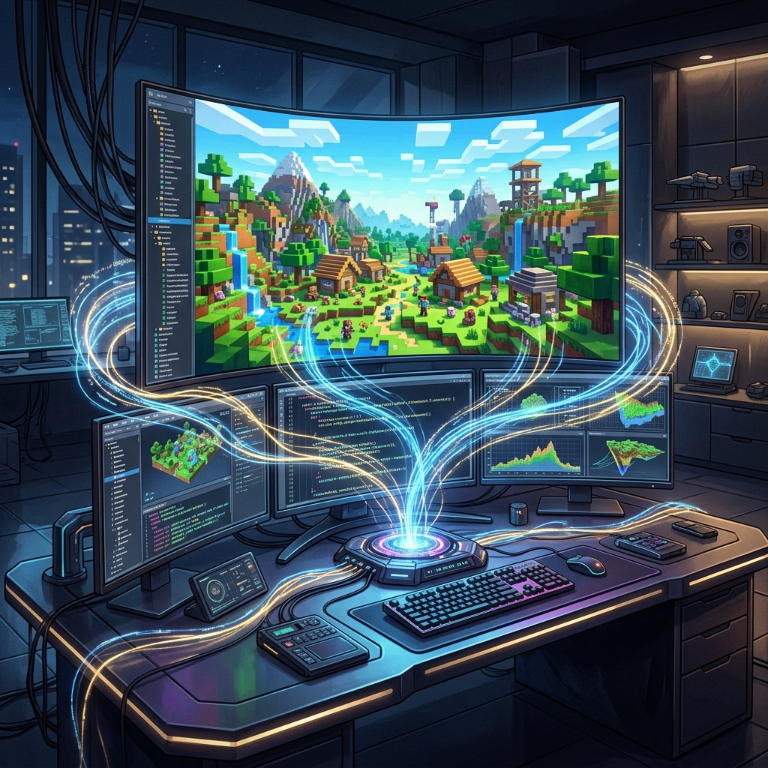
Code without a single edit
In the overwhelming majority of cases, generating complex software projects with machine learning requires long hours of manual debugging. Engineers and programmers usually have to keep refining text prompts, fixing logic errors, and carefully assembling scattered code fragments into a whole. This time, however, the situation was completely different. The neural network independently produced a massive block of code exceeding three thousand lines, which compiled successfully right away and launched as a fully playable prototype. The generated game already included basic mechanics for breaking and placing blocks, procedural terrain generation, and simple object interaction physics. The fact that all of this worked on the first try came as a real surprise to the specialists conducting this bold experiment.
Architect of virtual worlds
The case of this game generation shows a huge leap in the development of modern language models. Previously, artificial intelligence handled only narrowly focused local tasks reasonably well, such as writing a single math function or a small script for a specific object. Now the system is capable of consistently holding the global architecture of an entire project in memory. The model clearly understands the complex relationship between visual graphics rendering, the physics core, and the overall logic of the game engine. Creating even the most simplified and basic copy of a large-scale project on the level of Minecraft — is an incredibly serious test of algorithmic and structural thinking. The new AI version passed that test successfully without any extra clarifying prompts from a human.
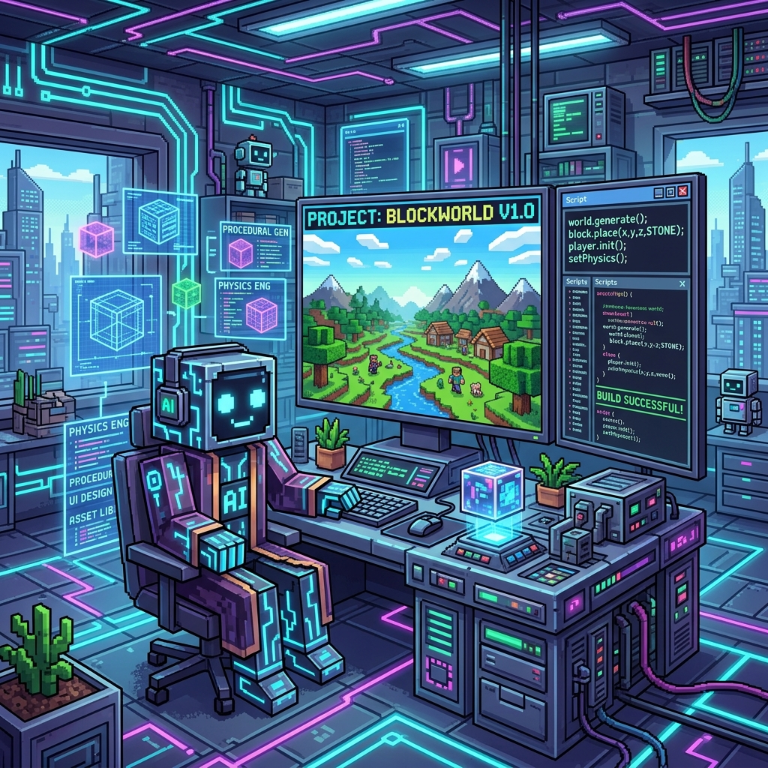
A new era for indie studios
For the entire gaming industry, news like this sounds like a sign of global structural change. Of course, it is still far too early to say that algorithms will completely replace the creative work of game designers or experienced programmers. However, they are already becoming, before our eyes, an extremely powerful supporting tool capable of speeding up prototyping by dozens of times. Imagine a situation where a small development team can generate the basic technical framework of its future game in just minutes. The time saved could then be spent on building a compelling story, creating a unique visual style, and polishing unconventional gameplay mechanics. This opens wide doors for people with amazing ideas who previously simply lacked the technical experience or budget to bring them to life.
Changing audience expectations
Technological breakthroughs like this will inevitably affect user expectations as well. If basic mechanics and familiar gameplay loops become so easy and fast to create, gamers will naturally start demanding much greater depth from new releases. It will become far harder to impress players with a standard set of familiar features, because implementing them well will turn into a routine task for smart algorithms. The focus of a demanding audience will gradually shift toward deep narrative, complex moral choices for characters, and a unique artistic vision that still remains an exclusively human prerogative.
The successful generation of a voxel sandbox convincingly proves that the industry stands on the threshold of a new era in entertainment content creation. Artificial intelligence is already fully ready to take over the most routine and large-scale work of writing foundational code. It is entirely possible that the next global hit, one that may one day surpass even Minecraft’s popularity records, will be created with the active involvement of neural networks. What do you think: will such deep automation benefit video games, or do we risk ending up with countless soulless and repetitive projects? It would be very interesting to hear your opinion and discuss the future of game development.
- publishedMceadmin
(Google Ads) Privacy Policy and Terms of Use


