The Mystery of Minecraft: Where Did the Great Obsidian Wall Come From?
- Android: 8,0+🕣 Updated
- CategoryInstructions
![The Mystery of Minecraft: Where Did the Great Obsidian Wall Come From?]()

The development history of Minecraft is full of mysteries, hidden mechanics, and unusual experiments. One of the most interesting and lesser-known artifacts from the early stages of the game's creation was the gigantic obsidian wall. This element existed in the code for only a short time, but it played a key role in shaping the version of the game we know today.
The Infdev Era: How Did the Obsidian Wall Appear?
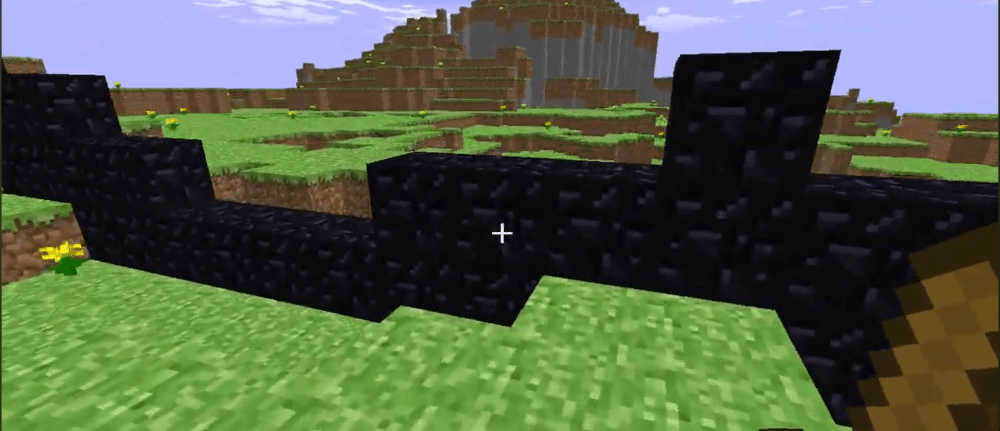
Obsidian walls were added to Minecraft during the early testing phase of the Infdev version. This happened in late February 2010, when the game's creator, Markus Persson (Notch), began a major transition from limited worlds (Indev version) to the concept of infinite terrain generation.
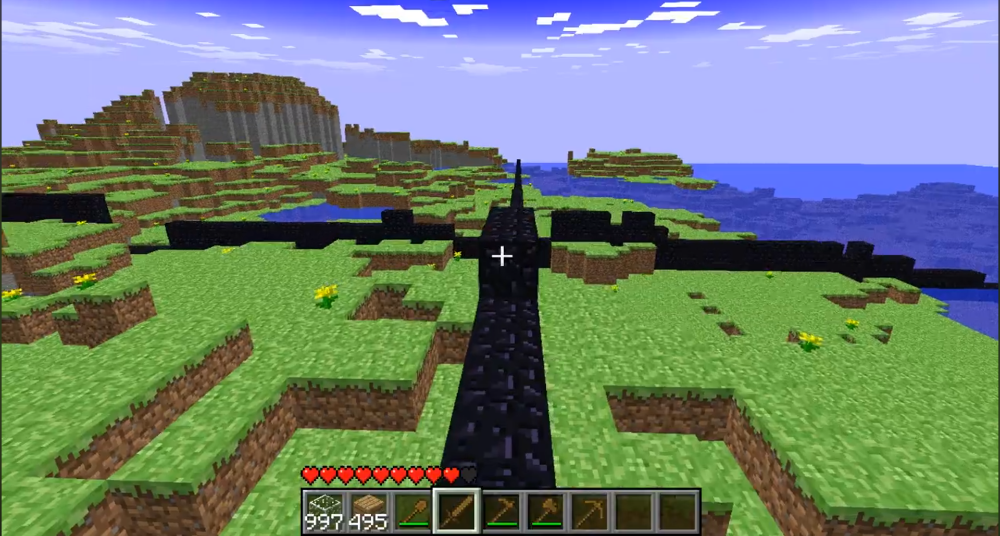
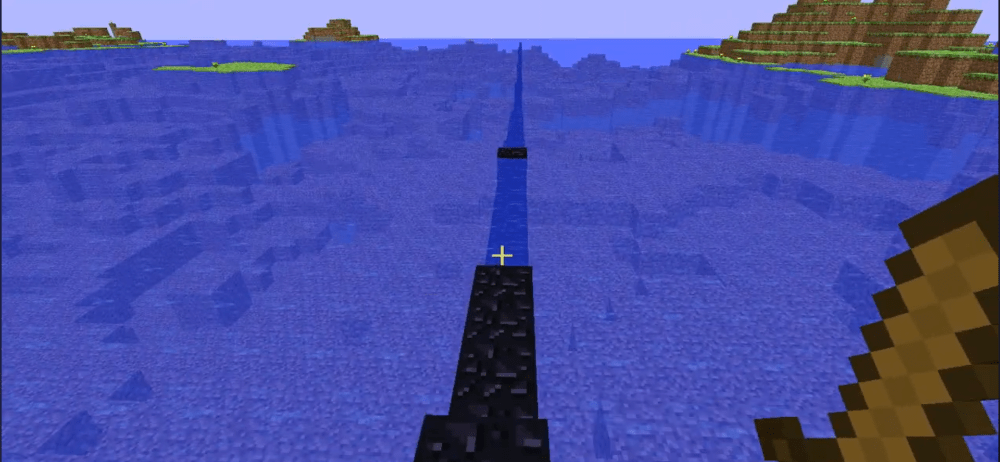
In version Infdev 20100227-1, players exploring new lands could suddenly encounter colossal barriers. The wall was a massive structure two blocks wide and stretching from bedrock to the sky. It extended infinitely along the zero coordinates on the X and Z axes, dividing the world into four giant sectors.
What Was the Purpose of This Structure?
The appearance of such monumental structures was not intended as part of the gameplay or lore. The obsidian walls served a purely technical function.
During the transition to infinite worlds, the developer needed a visual tool to debug the chunk generation system. The walls acted as clear visual markers of the zero coordinates. Thanks to them, Markus Persson could easily track how new map fragments connected to each other, whether the lighting algorithms worked correctly, and if there were any critical errors when creating new blocks beyond the already explored territory. Obsidian was chosen simply because it was a durable material that stood out against the rest of the world.
Why Was the Wall Removed from the Game?
Technical experiments in early versions of Minecraft often ended quickly. The obsidian wall was no exception.
It was removed from the game just a few weeks after being added, in March 2010. The reason for the change was simple: the infinite world generation system had stabilized. The algorithms began to work smoothly, and the need for crude visual markers to debug chunks disappeared. Leaving giant, impenetrable walls in the game was impractical, as they hindered free exploration of the world and disrupted the natural appearance of the landscape. With subsequent Infdev updates, generation became seamless, and the technical walls disappeared from the code forever.
Impact on Players and Legacy
Since the wall existed only in a few test builds, the vast majority of Minecraft fans never saw it in person. However, for veteran players and researchers of the game's history, it became a kind of legend. This technical barrier symbolizes an important milestone — the moment when the Minecraft universe ceased to be confined and achieved its infinite scale.
Conclusion
The obsidian wall is an excellent example of how developers' technical solutions can become an interesting part of a video game's history. Today, we enjoy the vast horizons of the cubic world thanks to bold experiments like this one from 2010.
Did you know about the existence of obsidian walls in early versions? What other removed or secret features of Minecraft do you find most interesting? Share your thoughts and discoveries in the comments!
- publishedMceadmin
(Google Ads) Privacy Policy and Terms of Use


