A Ticket to Minecraft’s Blocky Past
- Android: 8,0+🕣 Updated
- CategoryInstructions
![A Ticket to Minecraft’s Blocky Past]()

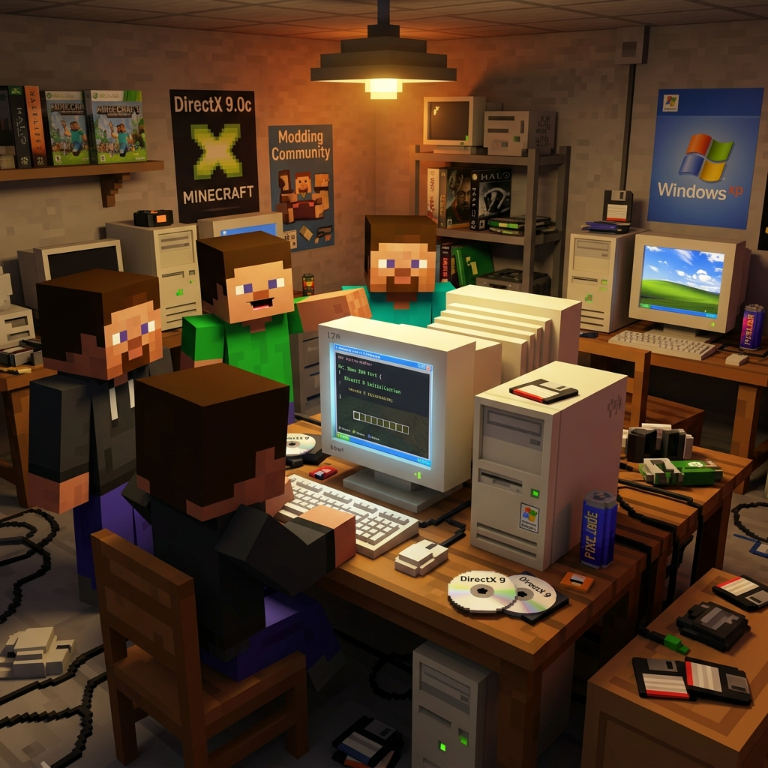
The gaming world is full of surprises, and sometimes the most interesting news comes not from major studios, but from fans willing to spend their own time on difficult projects. A remarkable story is unfolding in the Minecraft community. A group of enthusiasts has taken on an ambitious goal: bringing an old console version of the game to Windows XP with DirectX 9 support. Let’s look at how this became possible and why it matters to players.
A leak that started it all
The project began after a large source code leak. The code came from Legacy Console Edition, which was originally developed by 4J Studios. Because those files became publicly available, independent programmers got a chance to study the internal structure of the famous sandbox in detail. That leak opened the door to many experiments, and adapting the game for older operating systems quickly became one of the boldest challenges of the year.
Inside the retro port
The main developer behind this technical experiment is known online as OptiJuegos. He recently shared the first details of his work on social media. To make the project run in a retro environment, he is using the GCC compiler to build a classic 32-bit version. Special attention is being paid to sound and code integration, with a new method based on fmod libraries. This unusual approach helps avoid false positives from PC security systems and makes the program more stable.
Why go back to the past?
The obvious question is why anyone would bother with Windows XP and outdated DirectX 9 today. For many players, the old console editions have a unique charm. They feature a distinct interface, different crafting systems, and a warm atmosphere that modern versions often lack. Much of the appeal is nostalgia. Many players remember gathering with friends around a single screen. Console editions offered an ideal local co-op experience, something that was always rare on PC. For longtime Minecraft fans, this is a real chance to run a beloved version on old hardware sitting in storage and relive childhood memories. That sense of classic gameplay is exactly why the project has drawn so much attention.
Preserving gaming history
Beyond the technical challenge, this port matters because it helps preserve older game versions. The digital era is fragile: servers go offline, old consoles break, and entire chapters of gaming history can disappear with them. Trying to move this console classic onto PC architecture is an important step. Enthusiasts are doing what they can to make sure future players can still explore early versions of major games in something close to their original form.
The other side of the story
That said, such a bold initiative comes with serious risks. The biggest issue is legal uncertainty. Since the project is based on unofficially leaked material, the rights holders could demand that development stop at any time in order to protect their intellectual property. On top of that, adapting a console-specific engine for old PCs takes enormous effort. It is no surprise that the developer has given no release date so far. The project could take years, or it may never move beyond a technical demo.
What we are seeing is still a fascinating phenomenon. The attempt to revive classic Minecraft for ancient operating systems shows just how deeply the community cares about its roots. Even if a fully playable version never arrives, the work itself deserves real respect. What do you think about this experiment? Would you set up an old OS just to play a retro version of Minecraft with the console interface? Share your thoughts in the comments.
- publishedMceadmin
(Google Ads) Privacy Policy and Terms of Use


